
- What is the Debt to Income Ratio?
- What Counts as “Debt” in the DTI Calculation?
- Front-End DTI vs. Back-End DTI (The Mortgage Gatekeepers)
- 1. The Front-End DTI (The Housing Ratio)
- 2. The Back-End DTI (The Total Debt Ratio)
- DTI vs. Credit Utilization: The Two Critical Numbers
- Step-by-Step Guide: How to Lower Your DTI Ratio Fast
- Strategy 1: Attack and Eliminate Small “Low-Balance, High-Payment” Debts
- Strategy 2: Consolidate Revolving Debt into a Fixed-Term Installment Loan
- Strategy 3: Scale Your Top-Line Income (Offensive Finance)
- Side-by-Side: US vs. UK Debt to Income Ratio Localization Guide
- Taking Control of Your Financial Metrics
When most people think about financial health or preparing to buy a home, they obsess over their credit score. They check their score on banking apps daily, watch their credit utilization like a hawk, and do everything in their power to nudge that three-digit number higher.
But there is a massive, hidden trap waiting for you.
You could have a perfect 800 credit score, a flawless 10-year payment history, and zero credit report errors. Yet, when you walk into a bank to apply for a mortgage or an auto loan, the loan officer can look you in the eye and reject your application in seconds.
Why? Because of your Debt-to-Income (DTI) Ratio.
Your credit score only measures your reliability—it shows how likely you are to pay back borrowed money based on your past behavior. But banks do not just care about your character; they care about your capacity. Your Debt to Income Ratio is the absolute mathematical gatekeeper that measures your capacity to take on new monthly payments. If this single number is out of line, your borrowing power hits a brick wall.
What is the Debt to Income Ratio?
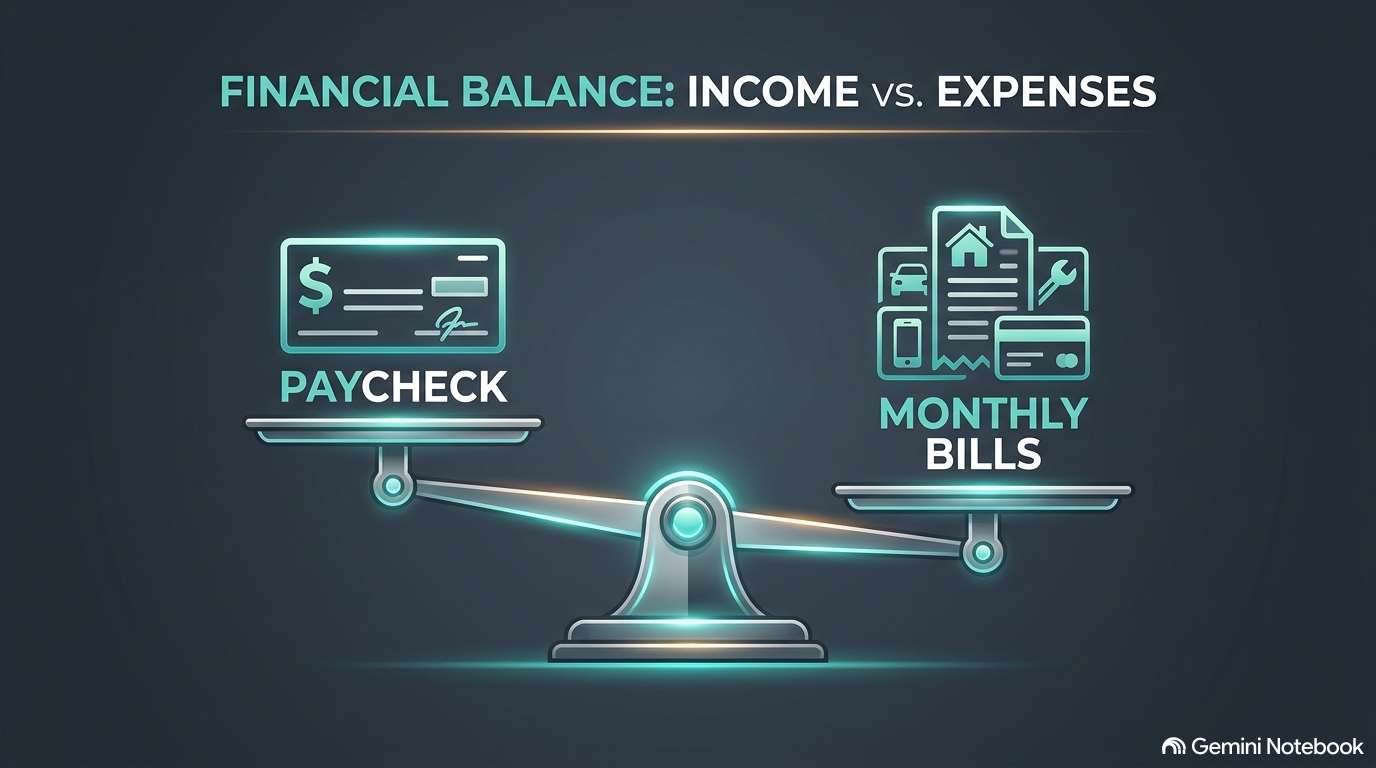
At its core, your Debt to Income Ratio is a simple percentage that compares your total mandatory, recurring monthly debt payments to your gross monthly income (your income before taxes, national insurance, and other deductions are taken out).
Lenders use this ratio to answer one critical question: Does this borrower make enough money to comfortably afford a new loan payment on top of the financial obligations they already have?
To calculate your Debt to Income Ratio ratio, you use this straightforward mathematical formula:
$$\text{Debt-to-Income Ratio} = \left( \frac{\text{Total Monthly Minimum Debt Payments}}{\text{Gross Monthly Income}} \right) \times 100$$
What Counts as “Debt” in the DTI Calculation?
Many consumers make the critical mistake of including standard living costs in their DTI calculations. To calculate your true ratio, you must understand what lenders actually count.
- What IS Included (Mandatory Credit Obligations): Lenders only include recurring payments that appear on your credit report or represent fixed housing costs. This includes mortgage principal and interest, property taxes, homeowners insurance, rent, minimum monthly credit card payments (not the total balance), car loan payments, student loans, personal loans, and child support or alimony payments.
- What IS NOT Included (Standard Cost of Living): Utilities (gas, electricity, water), mobile phone tariffs, broadband, gym memberships, streaming subscriptions, car insurance, groceries, and petrol. These are considered variable living expenses rather than contractual debt liabilities.
Front-End DTI vs. Back-End DTI (The Mortgage Gatekeepers)
If you are applying for a mortgage to buy a house, underwriters will split your DTI into two distinct figures. Understanding this split is critical to passing their audits.
                  +-----------------------------------+
                  |      Underwriter DTI Audits       |
                  +-----------------------------------+
                                    |
        +---------------------------+---------------------------+
        |                                                       |
        v                                                       v
+-------------------------------+               +-------------------------------+
| FRONT-END DTI (Housing Only)  |               | BACK-END DTI (All Liabilities)|
| Preferred Limit: <= 28%       |               | Preferred Limit: <= 36%       |
| Measures: Proposed mortgage,  |               | Measures: Proposed housing    |
| taxes, & home insurance costs |               | cost PLUS all credit cards,   |
| relative to gross income.     |               | auto, & student loan payments.|
+-------------------------------+               +-------------------------------+
1. The Front-End DTI (The Housing Ratio)
This ratio measures your prospective housing costs in isolation. It compares your proposed monthly housing payment (which includes mortgage principal, interest, property taxes, home insurance, and any HOA or service fees) against your gross monthly income. Lenders generally prefer your front-end DTI to remain at or below 28%.
2. The Back-End DTI (The Total Debt Ratio)
This is the heavyweight metric lenders care about most. It combines your prospective monthly housing payment with all other recurring monthly minimum debt payments (credit cards, student loans, car notes, etc.) and compares the sum against your gross income. Lenders want your back-end DTI to remain at or below 36%.
While some federal loan programs (such as FHA loans in the US) allow back-end DTIs up to 43% (or even 50% under rare exceptions), crossing the 43% mark is a hard legal boundary for conventional loans. To underwriters, a high back-end DTI means you have zero financial margin.
DTI vs. Credit Utilization: The Two Critical Numbers
To optimize your borrowing power, you must understand how your DTI ratio interacts with your Credit Utilization Ratio. These are the two metrics that govern your financial life, but they serve completely different purposes:
| Feature | Debt-to-Income (DTI) Ratio | Credit Utilization Ratio |
|---|---|---|
| What It Measures | Your financial capacity (Income vs. Debt Payments) | Your financial responsibility (Balances vs. Limits) |
| How It Is Calculated | $\text{Monthly Debts} \div \text{Gross Monthly Income}$ | $\text{Total Card Balances} \div \text{Total Credit Limits}$ |
| Direct Credit Score Impact | 0% (Credit bureaus do not collect income data) | 30% of your total FICO Score (Massive impact) |
| Primary Risk Indicator | Default risk due to lack of cash flow | Default risk due to over-relying on revolving credit |
| Ideal Target Range | Under 36% (for optimal loan approvals) | Under 10% (1% to 3% for an excellent score) |
Step-by-Step Guide: How to Lower Your DTI Ratio Fast
If you are planning to apply for a major loan and your DTI is currently sitting in the danger zone (above 40%), you must take active steps to bring it down. Here are three highly effective, strategic levers to lower your Debt to Income Ratio:
Strategy 1: Attack and Eliminate Small “Low-Balance, High-Payment” Debts
If you want to lower your Debt to Income Ratio quickly, focus on your Debt Snowball payoff strategy [168, 198].
In a DTI calculation, a $500 credit card balance with a $25 minimum payment hurts your ratio exactly the same way as a $10,000 personal loan with a $25 minimum payment. The underwriter’s algorithm does not look at the total principal; it only looks at the required monthly outflow.
By aggressively targeting your smallest credit balances and wiping them out, you eliminate their minimum payments from your report, dropping your monthly debt commitments and instantly lowering your DTI ratio.
Strategy 2: Consolidate Revolving Debt into a Fixed-Term Installment Loan
Revolving credit card accounts carry high, volatile interest rates that result in high minimum monthly payments.
By consolidating your high-interest credit card debt into a single, low-interest personal consolidation loan, you can drastically lower your monthly payment [183, 204]. A lower interest rate means more of your payment goes toward principal rather than interest [161], which allows you to secure a lower, fixed monthly installment. This single payment swap drops your total monthly debt commitments, lowering your back-end DTI in the process.
Strategy 3: Scale Your Top-Line Income (Offensive Finance)
Because DTI is a ratio, paying down debt is only half the battle. You can also lower the ratio by increasing the denominator: your gross monthly income.
Launching an “offensive finance” campaign by starting a profitable side hustle [173] or taking on freelance remote consulting contracts [147] directly increases your monthly income. As long as you can document this extra income through tax returns or consistent bank statements, it increases your gross monthly income denominator, causing your DTI ratio to drop.
Side-by-Side: US vs. UK Debt to Income Ratio Localization Guide
Underwriting rules and mortgage metrics vary significantly by region. Use this localization guide to understand how your local lenders evaluate your debt-to-income profile:
| Feature | 🇺🇸 United States Version | 🇬🇧 United Kingdom Version |
|---|---|---|
| Primary Metric Name | Debt-to-Income (DTI) Ratio | Debt-to-Income / Debt Service Ratio |
| Mortgage Limit Rules | Qualified Mortgage (QM) limit is generally 43% | Lenders use income multipliers (typically capped at 4.5x gross income) |
| Credit Score Equivalents | FICO Score (300 to 850) | Experian / Equifax Credit Rating |
| Primary Income Verification | W-2 forms, 1099-NEC tax returns, IRS transcripts | P60 certificates, payslips, SA302 self-assessment forms |
| Essential Variable Overhead | Groceries, car notes, 401k payments | Groceries, car hire purchase (HP/PCP), workplace pension |
| Colloquial Milestone | “Qualifying for a prime mortgage interest rate” | “Getting a proper good mortgage rate from the building society” |
Taking Control of Your Financial Metrics
Your Debt to Income Ratio is the ultimate indicator of your financial vulnerability. An exceptionally high DTI means you are structurally fragile—every dollar that enters your checking account is instantly siphoned off to lenders, leaving you completely skint and vulnerable to unexpected emergencies [193, 194].
By auditing your fixed overhead through a 90-day bank statement review [194, 196] and systematically eliminating your revolving liabilities, you reclaim control over your cash flow. Stop managing your finances in the dark. Calculate your Debt to Income Ratio today, create a targeted payoff plan, and build a solid financial baseline that turns rejections into guaranteed approvals.
Disclaimer: DebtPave provides free, educational personal finance resources to help you take control of your cash flow. We are not certified financial advisors or legal experts. Always consult with a registered professional before making major financial decisions.