
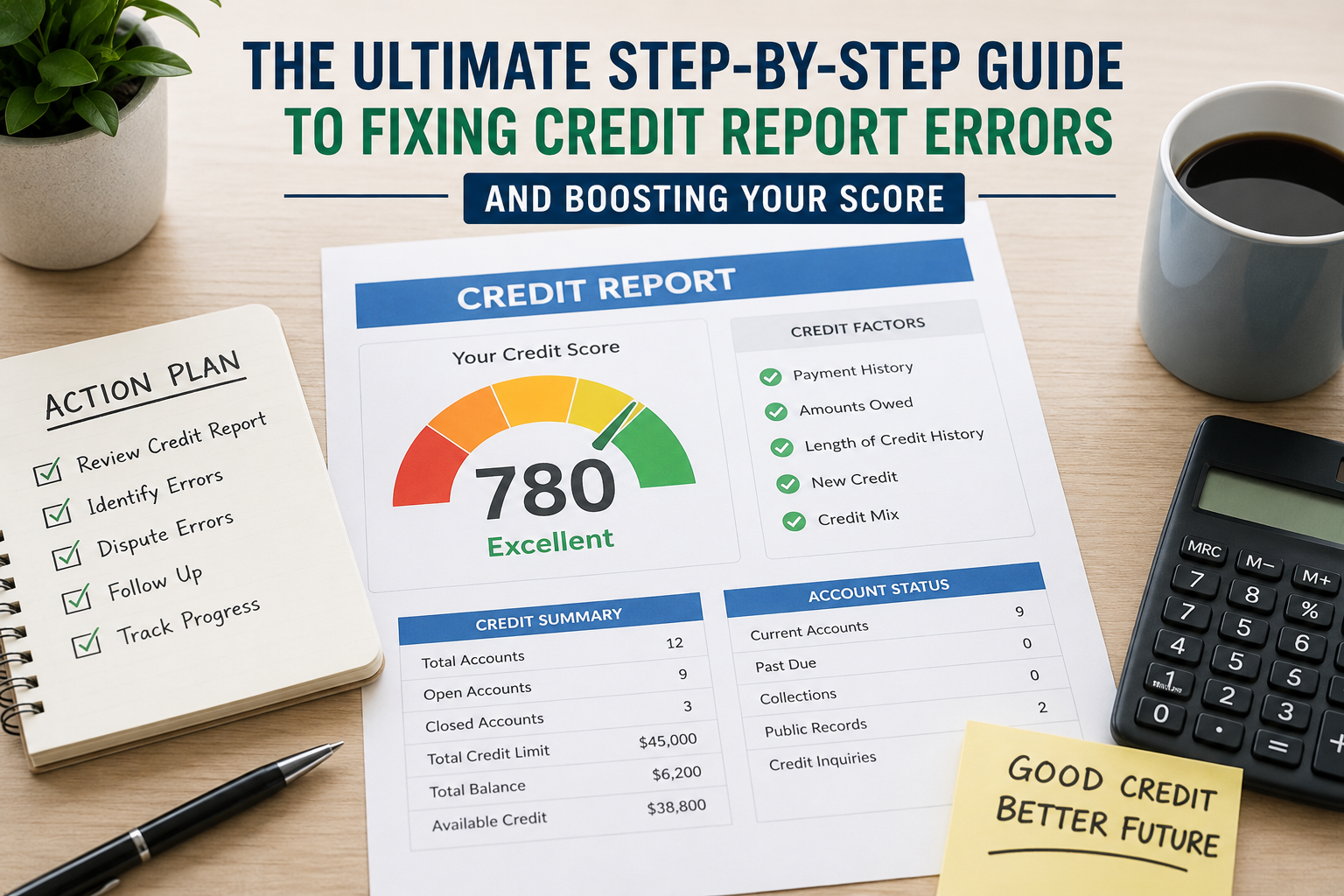
- Introduction: The True Cost of Inaccurate Credit Reporting
- Step 1: Obtain Official, Unaltered Copies of Your Credit Reports
- Step 2: Conduct a Systematic Credit Audit
- Step 3: Calculate the Impact on Your Credit Utilization Ratio
- Step 4: Draft Formal Written Dispute Letters
- Step 5: Establish a Secure Paper Trail and Monitor Timelines
- Step 6: Next Steps After Your Credit Audit
- Frequently Asked Questions (FAQ)
- Conclusion: Taking Control of Your Credit Profile
Introduction: The True Cost of Inaccurate Credit Reporting
Your credit score is one of the most important financial metrics in your adult life. It dictates not only whether you qualify for credit cards, auto loans, or mortgages, but also determines the interest rates you are charged, the insurance premiums you pay, and even whether a landlord will approve your apartment rental application.
Unfortunately, credit reporting systems are far from perfect. Independent studies have shown that nearly one in five consumers has a material error on at least one of their credit reports that negatively impacts their credit score.
A single erroneous late payment mark, an incorrectly reported account balance, or a duplicate collections entry can drop your credit score by 40 to 100 points. Over a lifetime, that score reduction can translate into tens of thousands of dollars in excess interest charges.
The good news is that under the Fair Credit Reporting Act (FCRA), you have the absolute right to audit your credit reports, dispute inaccurate information, and demand that credit bureaus remove unverified or incorrect items. This comprehensive guide walks you through the entire credit repair process step-by-step so you can reclaim your financial reputation.
Step 1: Obtain Official, Unaltered Copies of Your Credit Reports
Before you can fix errors on your credit profile, you must obtain complete, official credit reports from all three major credit bureaus: Equifax, Experian, and TransUnion.
Free Official Reports vs. Commercial Monitoring Apps
Do not rely solely on free third-party credit monitoring apps for the dispute process. While these apps are excellent for tracking general score trends and getting alerts, they often display summarized data rather than the full, unvarnished report details necessary for a formal dispute.
Under federal law, you are entitled to free copies of your full credit reports from all three bureaus via AnnualCreditReport.com. This is the only federally authorized website for free reports.
What to Download
Once logged in, download and save the PDF versions of your complete reports from all three bureaus. Ensure that account numbers, payment histories, reported balances, and creditor comments are fully visible on the documents.
Step 2: Conduct a Systematic Credit Audit
Sit down with your printed or PDF credit reports and a highlighter. Review every single section line-by-line, comparing the reported data across all three bureaus. Credit bureaus do not share data with each other by default, so errors often appear on one bureau’s report but not on the others.
Key Areas to Audit:
- Personal Information Errors: Check for misspelled names, unfamiliar addresses, or incorrect Social Security digits. While an address typo might seem harmless, incorrect personal data can cause your file to be mixed up with another individual’s (known as a “mixed file”), which can drag someone else’s bad debts onto your report.
- Account Status Errors: Look closely at your payment history charts. Are there late payments logged for months where you paid on time? Is an account marked as “Delinquent” or “Charged-Off” even though it was settled or paid in full years ago?
- Balance and Limit Errors: Compare the reported credit limits and current balances with your actual bank statements. If a credit card issuer reports a credit limit that is significantly lower than your actual limit, it will artificially damage your score.
- Duplicate Accounts: If an old debt was sold to a collection agency, verify that the original creditor and the collection agency are not both reporting an active balance for the same underlying debt. Double counting active balances inflates your total debt burden.
📌 If high credit card balances are inflating your reported utilization, uncover the hidden fee structures driving up those balances in 5 Sneaky Credit Card Traps Keeping You in Debt (And How to Escape).
Step 3: Calculate the Impact on Your Credit Utilization Ratio
Credit utilization—the percentage of your total available credit currently in use—accounts for roughly 30% of your total credit score.
$$\text{Credit Utilization Ratio} = \left( \frac{\text{Total Current Balances}}{\text{Total Available Credit Limits}} \right) \times 100$$
If a bureau erroneously reports an old balance, or fails to update a recent payoff, your utilization percentage can artificially cross critical scoring thresholds (such as 30%, 50%, or 90%), leading to immediate score drops. Identifying and correcting these specific balance errors is one of the fastest ways to see a rapid score increase.
Step 4: Draft Formal Written Dispute Letters
While credit bureaus heavily encourage consumers to use their online dispute portals, sending a formal written dispute letter via physical mail is generally far more effective.
Online portals frequently limit your dispute options to simple drop-down boxes, stripping away context. A formal physical letter forces the credit bureau to assign a human compliance officer to review your documentation.
Essential Components of a Dispute Letter
Your letter should be concise, objective, and factual. Avoid emotional language and focus strictly on verified facts. You can use the template below to structure your request:
[Your Full Name]
[Your Current Address]
[Your Date of Birth]
[Last 4 Digits of Social Security Number]
[Date]
[Credit Bureau Name]
[Credit Bureau Dispute Department Address]
SUBJECT: Formal Dispute of Inaccurate Credit Report Information
To Whom It May Concern,
I am writing to formally dispute inaccurate information appearing on my credit report. I have identified the following errors and request immediate investigation:
DISPUTED ITEM #1:
- Company Name: [Creditor Name]
- Account Number: [Account Number]
- Reason for Dispute: This account is reporting a 60-day late payment for March 2025. Attached is my bank statement proving full payment was rendered on time on March 3, 2025.
DISPUTED ITEM #2:
- Company Name: [Collection Agency Name]
- Account Number: [Account Number]
- Reason for Dispute: This collection account represents a duplicate entry for an account already paid. Attached is the settlement confirmation letter from the original creditor.
Under the Fair Credit Reporting Act (15 U.S.C. § 1681i), you are required to conduct an investigation and correct or delete all inaccurate or unverified items within 30 days.
Please send an updated copy of my credit report once these corrections have been processed.
Sincerely,
[Your Signature]
Enclosures: Copy of Driver’s License, Copy of Utility Bill, Bank Statements, Settlement Confirmation.
Step 5: Establish a Secure Paper Trail and Monitor Timelines
Once your dispute letter is drafted and your supporting documents are attached, you must control the timeline.
- Send Via Certified Mail: Always send your dispute packages via Certified Mail with Return Receipt Requested through the postal service. This provides you with a physical green card bearing a signature, giving you legal proof of the exact date the credit bureau received your request.
- Track the 30-Day Clock: Under the FCRA, credit bureaus generally have 30 calendar days from the date of receipt to investigate the disputed item with the reporting creditor.
- Review the Results: If the creditor fails to verify the accuracy of the disputed information within that 30-day window, or if they fail to respond entirely, the credit bureau is legally required to delete or modify the item immediately. You will receive a mailed summary of the investigation results.
Step 6: Next Steps After Your Credit Audit
Once inaccurate negative items are removed from your reports, your score will usually reflect an immediate positive boost. However, repairing credit report errors is only one half of long-term credit management; the other half is maintaining a sustainable cash flow system that prevents future missed payments or high balances.
Keep monitoring your reports annually. If a deleted item miraculously reappears on your report later (a practice known as “re-insertion”), the bureau must notify you in writing within 5 days. If they fail to do so, you have grounds to demand its immediate permanent removal.
📌After repairing your credit report errors, prevent future financial strain by organizing your monthly obligation payments with our guide on Debt Consolidation vs. Debt Settlement: Which Strategy Saves You More Money?.
Frequently Asked Questions (FAQ)
Q: How long does a credit dispute take to complete?
A: Under federal law (FCRA), credit bureaus have 30 calendar days from the date they receive your physical dispute letter to investigate and respond. If you provided additional documentation during the process, they may receive a 15-day extension.
Q: Is it better to dispute credit report errors online or by mail?
A: Disputing by physical certified mail is much more effective. Online dispute portals often limit your options to basic drop-down lists and may require you to agree to arbitration clauses that give up your legal rights. Certified mail provides proof of receipt and forces a manual human review.
Q: Will disputing an error temporarily drop my credit score?
A: No. Filing a dispute does not drop your credit score. If the disputed item is an inaccurate negative mark (like a fraudulent collection or erroneous late payment) and it gets removed, your score will typically go up once the bureau updates your report.
Q: What happens if the credit bureau refuses to remove the disputed item?
A: If the credit bureau verifies the item as correct but you still have proof it is wrong, you can submit a dispute directly to the reporting lender (furnisher). You can also submit a formal complaint with the Consumer Financial Protection Bureau (CFPB) or attach a 100-word explanatory statement to your credit file.
Conclusion: Taking Control of Your Credit Profile
Fixing errors on your credit report requires patience, organization, and persistence, but the financial return on your investment is substantial. By systematically auditing your reports, identifying discrepancies, and enforcing your legal rights through certified written disputes, you can remove inaccurate marks, restore your credit score, and open up better financial opportunities for your future.