
- Part 1: Debt Relief vs. Debt Consolidation (The Critical Distinction)
- 1. Debt Consolidation Loans
- 2. Debt Relief (Settlement)
- Part 2: Step-by-Step: How Does Debt Settlement Work?
- Step 1: The Hardship Evaluation
- Step 2: Setting Up Your Escrow Account
- Step 3: The Accumulation and Delinquency Phase
- Step 4: The Negotiation and Offer Phase
- Step 5: Approving and Clearing the Debt
- Part 3: Side-by-Side: US vs. UK Debt Relief Localization Guide
- Part 4: Who Actually Qualifies for Debt Settlement?
- Part 5: The Risks and Drawbacks You Must Consider
- Part 6: How to Spot a Legitimate Program and Avoid Scams
- What to Do Next
Disclosure: This post contains affiliate links. If you click through and sign up for a recommended product, we may earn a small commission at no extra cost to you. We only recommend products we verify and trust.
Managing high-interest debt can feel like you are running on an endless financial treadmill that never stops [158, 180]. When minimum monthly payments barely cover the interest, your principal balance stays virtually untouched, leaving a lot of everyday folks trapped in a cycle of endless financial stress [158, 161, 180].
For anyone facing genuine, severe financial hardship, traditional payoff strategies like the Debt Snowball or Debt Avalanche might feel completely out of reach because there is simply no extra cash left in the monthly budget [159, 160]. In these situations, debt relief programs—or what most people just call debt settlement—offer a realistic way out to settle what you owe for way less than the original balance [180].
But if you are considering this path, you must understand the exact mechanics behind it. How do these programs operate? What is the catch? In this comprehensive guide, we will explore the fundamental question: how does debt settlement work? We will break down the step-by-step process of professional debt negotiation, examine who qualifies, outline the key risks, and compare US and UK structural implementations to help you make an informed decision [181, 184].
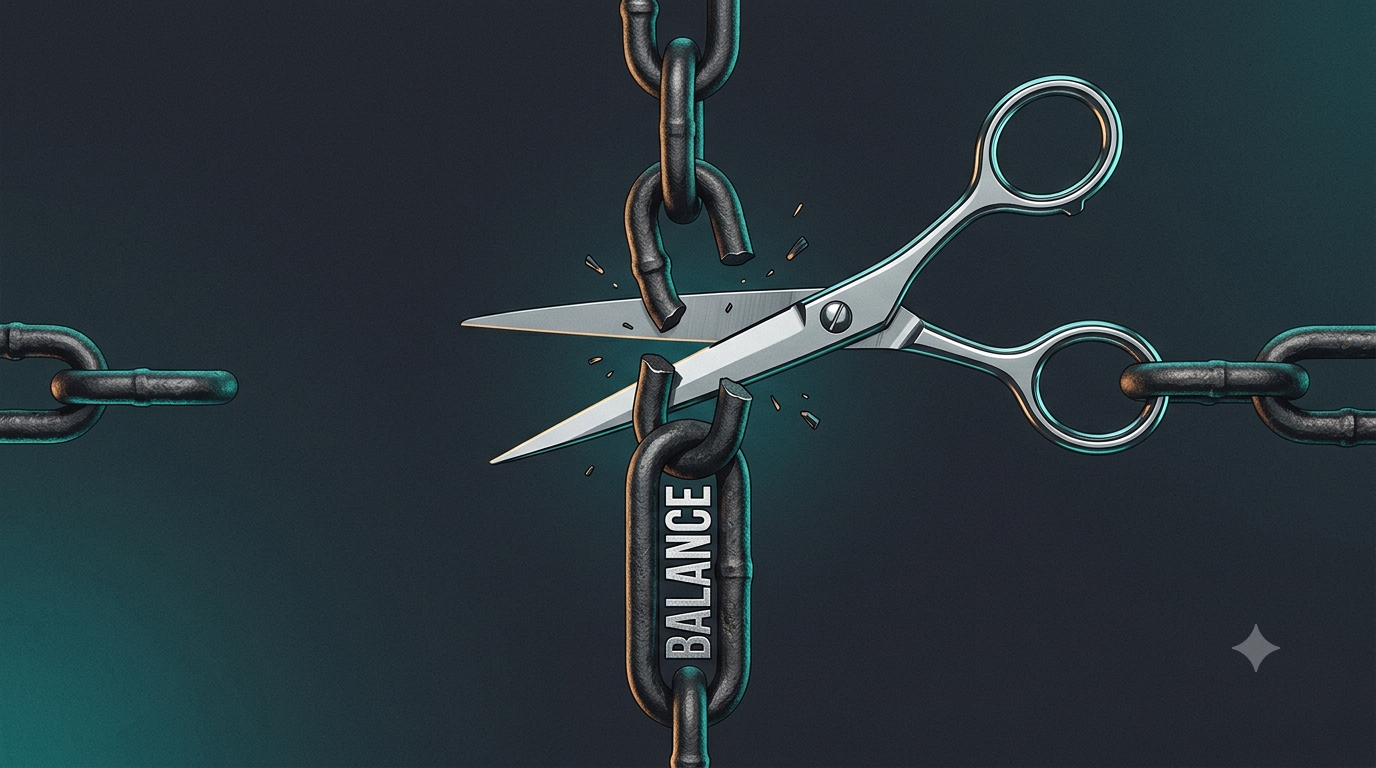
Part 1: Debt Relief vs. Debt Consolidation (The Critical Distinction)
A very common mistake among consumers is mixing up debt relief with debt consolidation. While they sound similar, they are entirely different financial strategies:
1. Debt Consolidation Loans
With consolidation, you take out a single large new loan (ideally at a much lower interest rate) and use it to pay off all your smaller credit cards and store accounts [183]. As we detailed in our guide on debt consolidation personal loans, you still end up paying 100% of the money you borrowed, but you simplify your life by consolidating multiple bills into one predictable payment every month [183].
2. Debt Relief (Settlement)
With debt relief, the objective is to pay significantly less than what you legally owe [183]. Professional negotiators leverage your financial hardship to convince banks and credit card issuers to accept a lump-sum payout of 50% to 70% of your outstanding principal balance, forgiving the remaining amount entirely [183].
| Feature | Debt Consolidation Loans | Debt Relief (Settlement) |
|---|---|---|
| Principal Owed | You pay back 100% of the principal [183] | Reduced (typically settled for 50%–70% of total) [183] |
| Credit Score Impact | Minimal (and can help your rating long term) [184] | Drops temporarily while settling accounts [184, 188] |
| Qualification | Requires decent credit to secure a competitive rate [184] | Based on real hardship and falling behind [184, 187] |
| Core Goal | Lower interest rates and single bill simplification [184] | Slashing the actual principal balance to wipe out debt [184] |
Part 2: Step-by-Step: How Does Debt Settlement Work?
If you decide to enroll in a professional debt relief program, the process is highly structured and plays out through these five key phases:
Step 1: The Hardship Evaluation
Your journey begins with a detailed evaluation by a certified debt specialist [185]. They review your monthly net income, fixed overhead, and total unsecured liabilities [185]. To qualify, you must demonstrate a genuine, life-altering financial hardship—such as job loss, divorce, or a major medical emergency—that prevents you from maintaining your current minimum payments [185, 187].
Step 2: Setting Up Your Escrow Account
Once enrolled, you stop making monthly payments to your creditors directly [185]. Instead, you establish a dedicated, FDIC-insured savings account (an escrow account) that remains in your name and under your complete control [185, 190]. Every month, you deposit a set, affordable payment into this account to build up your settlement fund [185].
Step 3: The Accumulation and Delinquency Phase
While your settlement fund is building up over several months, your enrolled credit card and personal loan accounts will naturally fall behind [186]. You will experience late fees, interest accumulation, and persistent collection calls [186, 189]. This is a necessary, albeit stressful, part of the strategy: it is this delinquency that gives negotiators leverage [186]. Banks realize that accepting a partial payout today is far better than receiving nothing if you are forced to file for bankruptcy [186].
Step 4: The Negotiation and Offer Phase
Once your escrow account accumulates enough cash to make a viable lump-sum offer, the debt settlement company’s negotiators contact your creditors [185, 186]. They negotiate each account individually. When a creditor agrees to settle—for instance, accepting $4,000 to clear a $9,000 credit card balance—they send a formal written agreement [186].
Step 5: Approving and Clearing the Debt
You must review and approve every single settlement offer [186, 190]. Once you sign off on the deal, the agreed-upon funds are paid directly out of your dedicated savings account to the lender [186]. The creditor then updates your account status with credit bureaus to show that the account is “Settled in Full” or “Paid for Less Than Agreed,” permanently wiping out the remaining balance [187].
                     THE DEBT SETTLEMENT TIMELINE

  [Month 1] Hardship evaluation & enroll unsecured accounts
      |
      v
  [Months 2-6] Stop direct payments; fund your FDIC savings account
      |
      v
  [Months 6-12] Accounts go past-due; negotiators leverage hardship
      |
      v
  [Months 12-24] Creditors agree to settlements (50%-70% of principal)
      |
      v
  [Months 24-48] Account marked "Settled for Less"; start credit repair
Part 3: Side-by-Side: US vs. UK Debt Relief Localization Guide
Navigating debt relief requires understanding the distinct regulatory bodies, legal structures, and terminology in your specific country:
| Focus Area | 🇺🇸 United States Version | 🇬🇧 United Kingdom Version |
|---|---|---|
| Primary Framework | Debt Settlement / Debt Relief Program | Individual Voluntary Arrangement (IVA) or Debt Settlement |
| Escrow Standard | FDIC-Insured Dedicated Savings Account [185] | Protected Client Premium Trust Account |
| Regulatory Body | Federal Trade Commission (FTC) [190] | Financial Conduct Authority (FCA) |
| Legal Status | Informal negotiation; no court involvement | Statutory/Legal contract (IVA is legally binding) |
| Affiliate Target | Standard debt settlement services (IAPDA/AAFCP) | Insolvency Practitioners (IPs) or Debt Advice Charities |
Part 4: Who Actually Qualifies for Debt Settlement?
Debt relief programs are not a “get out of debt free card” for anyone who simply does not feel like paying their bills [187]. Traditional creditors will only negotiate if they are convinced they have no other way to recover their funds [187]. Legitimate programs typically look for these three criteria:
- A Minimum Debt Threshold: Most reputable debt settlement firms require you to have at least $10,000 (or £8,000 in the UK) in total unsecured liabilities to ensure the mathematical fee structure makes sense for both parties [187].
- Unsecured Liabilities Only: Only unsecured debts—such as credit cards, store cards, personal loans, and medical bills—are eligible [182]. Secured debts (mortgages, auto loans, PCP car agreements) are never eligible because lenders can simply repossess the underlying asset [182].
- Inability to Pay Off Debt in 3 to 5 Years: If your debt-to-income (DTI) ratio is so high that making standard minimum payments will keep you trapped for 20+ years, you are a prime candidate for a structured 24-to-48-month settlement program [187].
Part 5: The Risks and Drawbacks You Must Consider
While wiping out 50% of your debt principal sounds incredible, you must be realistic about the trade-offs:
- Severe Credit Score Impact: Because you must stop making direct payments to accumulate a settlement fund, your credit score will experience a significant drop during the initial stages of the program [188]. However, once your balances are settled and updated to a zero-balance status, you can begin to actively rebuild your profile using credit builder accounts [188].
- The Sneaky Tax Trap: The US Internal Revenue Service (IRS) treats forgiven debt as taxable income [189]. If a lender forgives $600 or more, they are required to issue you a Form 1099-C [189]. You may have to pay income tax on that forgiven amount unless you can prove to the IRS that you were “insolvent” (your total liabilities exceeded your total assets) at the time of the settlement using Form 982 [189].
- Collection Efforts: Creditors have the legal right to continue collection efforts, charge late fees, and potentially file lawsuits before a settlement is finalized [186, 189].
Part 6: How to Spot a Legitimate Program and Avoid Scams
The debt relief industry has historically attracted predatory actors, leading to strict regulatory protections from the FTC [190]. Protect your finances by looking for these three indicators of a legitimate company:
- ABSOLUTELY NO UPFRONT FEES: By federal law, a debt settlement company cannot charge you a single penny of fees until they have successfully settled a debt and you have accepted the agreement [190]. Any company demanding upfront enrollment or administrative fees is operating illegally—avoid them [190].
- Complete Account Ownership: Your dedicated savings account must remain under your name and control at all times [190]. You should have the legal right to withdraw your funds and walk away from the program at any point without penalty [190].
- Topical Honesty: A trustworthy company will never guarantee specific settlement percentages, promise that collection calls will instantly stop, or claim there will be zero impact on your credit rating [190].
What to Do Next
If you are drowning in high-interest liabilities and feel that a debt relief program is your best option, take the first step today by pulling your statutory credit reports to verify your total balances [185, 187]. If your situation is manageable but tight, consider performing a 90-day bank statement audit and establishing a $1,000 starter emergency fund first to see if you can claw back your cash flow without impacting your credit score [175, 222, 224].
Disclaimer: DebtPave provides free, educational personal finance resources to help you take control of your cash flow. We are not certified financial advisors or legal experts. Always consult with a registered professional before making major financial decisions.Gemini Notebook can be inaccurate; please double-check its responses.