
- Part 1: Canceled Debt as Cash: Why Canceled Debt is Taxed
- The $600 Threshold
- Part 2: Step-by-Step: How to Read Your Form 1099-C
- Part 3: Side-by-Side: US vs. UK Tax Treatment of Forgiven Debt
- Part 4: How to Avoid Canceled Debt Tax: The Insolvency Exclusion
- What is Insolvency?
- Proving Insolvency: A Working Example
- Part 5: Master Action Plan for Tax Time
- What to Do Next
Disclosure: This post contains affiliate links. If you click through and sign up for a recommended product, we may earn a small commission at no extra cost to you. We only recommend products we verify and trust.
Imagine the overwhelming sense of relief you feel when you finally complete a long-term debt relief program. You successfully negotiated with your creditors, slashed your credit card balances by 50%, and wiped out thousands of dollars in high-interest debt [181, 183]. You are ready to start rebuilding your credit rating on a clean slate and focus your cash flow on building a lasting emergency savings buffer [175, 188].
But just when you think you are completely in the clear, tax season rolls around, and a sneaky document lands in your mailbox: IRS Form 1099-C (Cancellation of Debt) [189].
For many everyday consumers, this form represents a shocking financial surprise. Why is your bank sending you a tax form for debt you didn’t even pay? The answer lies in a fundamental rule of tax law: the Internal Revenue Service treats most forgiven debt taxable income [189]. In this guide, we will break down why the IRS taxes canceled debt, how Form 1099-C works, and show you how to utilize the “insolvency exclusion” to potentially protect your budget from a massive, unexpected tax bill [189].
Part 1: Canceled Debt as Cash: Why Canceled Debt is Taxed
To understand why the IRS taxes forgiven debt, we have to look at how income is defined. In the eyes of the tax collector, when you borrow money, it is not considered taxable income because you have a legal obligation to pay it back.
However, if a lender forgives, settles, or cancels a portion of that debt, your obligation to repay vanishes [181]. Because you no longer have to pay back those funds, you have experienced a direct increase in your net worth—meaning you have essentially received a taxable financial benefit [189]. Consequently, the government categorizes this forgiven debt taxable income as a form of cash compensation.
The $600 Threshold
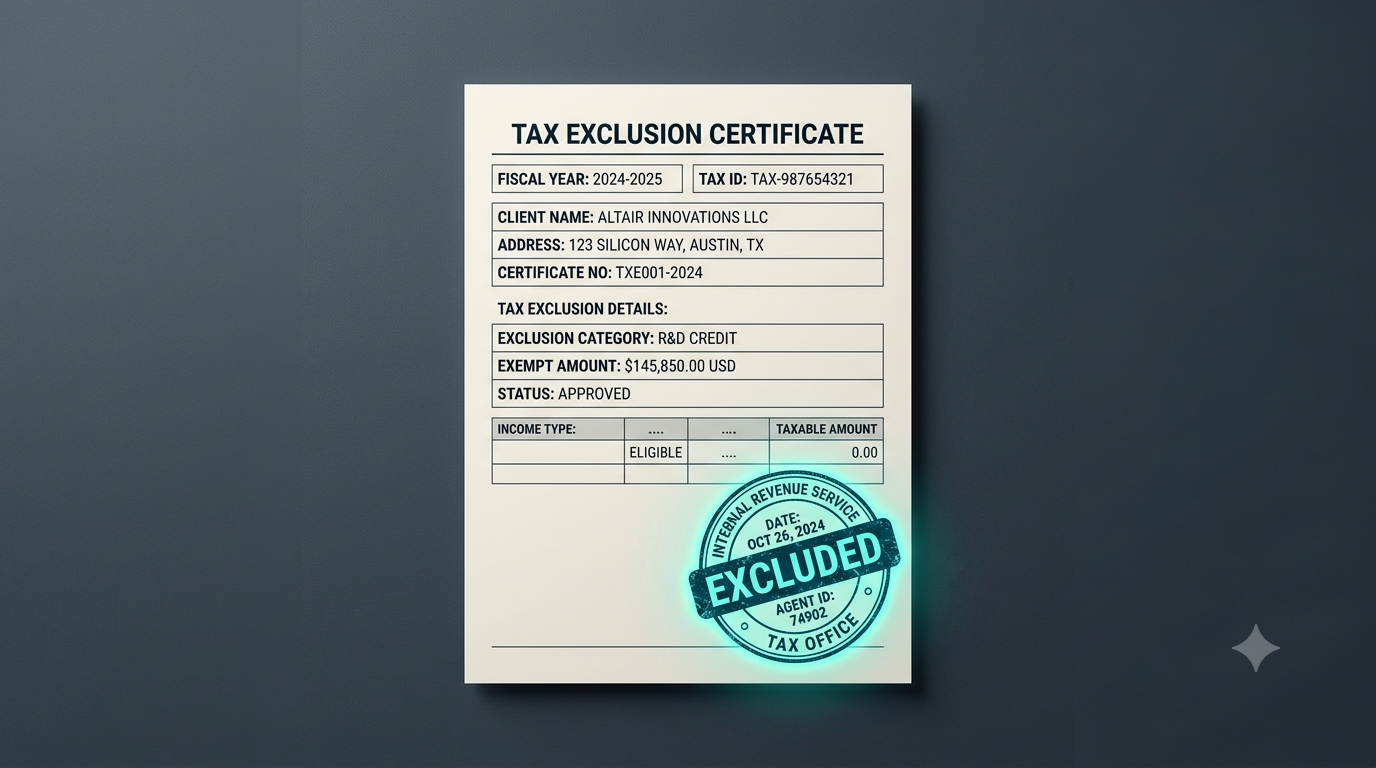
By federal law, if a financial institution (like a credit card issuer, personal loan provider, or credit union) forgives $600 or more of debt principal, they are legally required to report that canceled balance to both you and the IRS using Form 1099-C [189].
For example:
- You carry an unsecured credit card balance of $10,000.
- Through a debt settlement program, you negotiate a deal to pay $4,000 to settle the account [183, 186].
- The remaining $6,000 is canceled by the bank [181, 183].
- Because $6,000 is well above the $600 threshold, the lender will send you a 1099-C showing $6,000 in Box 2 (Amount of debt canceled) [189].
- Unless you qualify for an exclusion, you must report that $6,000 as ordinary forgiven debt taxable income on your annual tax return, potentially costing you thousands in additional tax liability [189]! This is why understanding the tax rules surrounding forgiven debt taxable income is absolutely critical to your long-term wealth protection.
Part 2: Step-by-Step: How to Read Your Form 1099-C
When you receive a 1099-C, do not panic and do not ignore it. The IRS receives a duplicate copy of this form, and failing to report it on your tax return will trigger automatic auditing penalties. Canceled debt is reported under the category of forgiven debt taxable income, meaning that any mismatch between your tax filing and GSC indexing will flag your file. Review these critical boxes on the form to understand your reporting obligations:
- Box 1 (Date of Identifiable Event): The exact date the lender legally canceled the debt.
- Box 2 (Amount of Debt Canceled): The total canceled balance that the IRS considers taxable income [189].
- Box 3 (Interest Included in Box 2): Canceled interest is typically not taxable, so check if interest is separated here.
- Box 6 (Identifiable Event Code): A letter code explaining why the form was issued (such as bankruptcy, settlement, or discharge).
                      FORM 1099-C AUDIT WORKFLOW

  [Step 1] Form 1099-C arrives showing canceled debt in Box 2
      |
      v
  [Step 2] Determine if the debt is eligible for a tax exclusion
      |
      v
  [Step 3] Calculate your total assets vs. total liabilities (Insolvency)
      |
      v
  [Step 4] File IRS Form 982 to claim the Insolvency Exclusion
      |
      v
  [Step 5] Exclude forgiven balance from your taxable income on your return
Part 3: Side-by-Side: US vs. UK Tax Treatment of Forgiven Debt
The tax treatment of canceled debt is one of the most significant differences between the US and UK consumer finance landscapes. If you are a US taxpayer, you must treat forgiven debt taxable income as ordinary income unless you are legally excluded under IRS guidelines. Use this comparative guide to understand how your location shapes your tax obligations:
| Feature | 🇺🇸 United States Rules | 🇬🇧 United Kingdom Rules |
|---|---|---|
| Primary Reporting Form | IRS Form 1099-C [189] | No statutory form required |
| Tax Authority | Internal Revenue Service (IRS) | His Majesty’s Revenue and Customs (HMRC) |
| Is Forgiven Debt Taxed? | YES (treated as ordinary taxable income over $600) [189] | NO (HMRC does not treat forgiven consumer debt as taxable income) |
| Core Primary Exception | Insolvency Exclusion (Form 982) [189] | Naturally exempt under standard UK insolvency/IVA rules |
| Impact of Bankruptcy | Fully exempt from taxes (Title 11 exclusion) | Fully exempt from taxes |
While the UK offers a more tax-friendly outcome for personal credit, US taxpayers must navigate the complex landscape of forgiven debt taxable income and filing appropriate exemptions to avoid severe IRS audit penalties.
Part 4: How to Avoid Canceled Debt Tax: The Insolvency Exclusion
Fortunately, the IRS recognizes that if you are forced to settle your debts because you are facing severe financial distress, paying a massive tax bill is often impossible [187, 189]. To protect consumers, the tax code provides a powerful escape hatch to reduce forgiven debt taxable income: The Insolvency Exclusion [189].
Under IRS rules, if you can prove you were “insolvent” at the moment the debt was canceled, you can exclude the forgiven balance from your taxable income entirely using IRS Form 982 [189].
What is Insolvency?
You are considered insolvent if your total liabilities (debts) exceeded the total fair market value of all your assets immediately before the cancellation occurred [189]. This is the most effective way to prevent settled balances from acting as forgiven debt taxable income.
- Your Liabilities Include: Credit card balances, mortgages, auto loans, medical bills, student loans, and unpaid taxes [182].
- Your Assets Include: Cash in bank accounts, retirement funds (401k/IRA), home equity, vehicles, jewelry, and personal property.
Proving Insolvency: A Working Example
Imagine you receive a 1099-C for $5,000 of settled credit card debt [189]. Immediately before the bank agreed to settle, you calculate your financial profile:
- Total Liabilities: $25,000 (including credit cards, personal loans, and auto loans)
- Total Assets: $15,000 (including cash, car value, and household goods)
- Insolvency Margin: $10,000 ($25,000 liabilities minus $15,000 assets)
Because your insolvency margin ($10,000) was larger than your canceled debt ($5,000), you can exclude the entire $5,000 from being treated as forgiven debt taxable income [189]! You simply fill out IRS Form 982 and attach it to your tax return to legally avoid paying taxes on that canceled balance [189].
Part 5: Master Action Plan for Tax Time
If you settled a debt for less than you owed this year, follow this systematic action plan to protect your budget and reduce any potential forgiven debt taxable income [183, 189]:
- Keep Meticulous Records: Save every single settlement letter, payment receipt, and bank statement from your debt relief program [185, 186].
- Calculate Your Insolvency Margin: Build an Excel sheet listing every single asset and liability you owned on the exact day your settlement was finalized [189].
- Prepare Form 982: If you were insolvent, fill out Form 982 (Reduction of Tax Attributes Due to Discharge of Indebtedness) [189]. Check Box 1b (to indicate discharge of debt to the extent of insolvency) and input the excluded amount on Line 2 [189].
- Report Canceled Balances Correctly: Ensure that your tax software reflects the Form 1099-C filing while offset by the corresponding Form 982 entry to neutralize forgiven debt taxable income reporting.
- Consult a Licensed Professional: Tax law is highly complex. Always consult a certified public accountant (CPA) or a licensed tax advisor to ensure your calculations are accurate and fully compliant with IRS regulations.
What to Do Next
If you settled your accounts and are waiting for tax season, build your asset and liability worksheet today so you are prepared when your 1099-C forms arrive to prevent unexpected forgiven debt taxable income penalties [189]. Re-allocate the money you save on taxes directly into your starter emergency fund or use it to establish a strong payment history with a credit builder loan [175, 188].
Disclaimer: DebtPave provides free, educational personal finance resources to help you take control of your cash flow. We are not certified financial advisors or legal experts. Always consult with a registered professional before making major financial decisions.